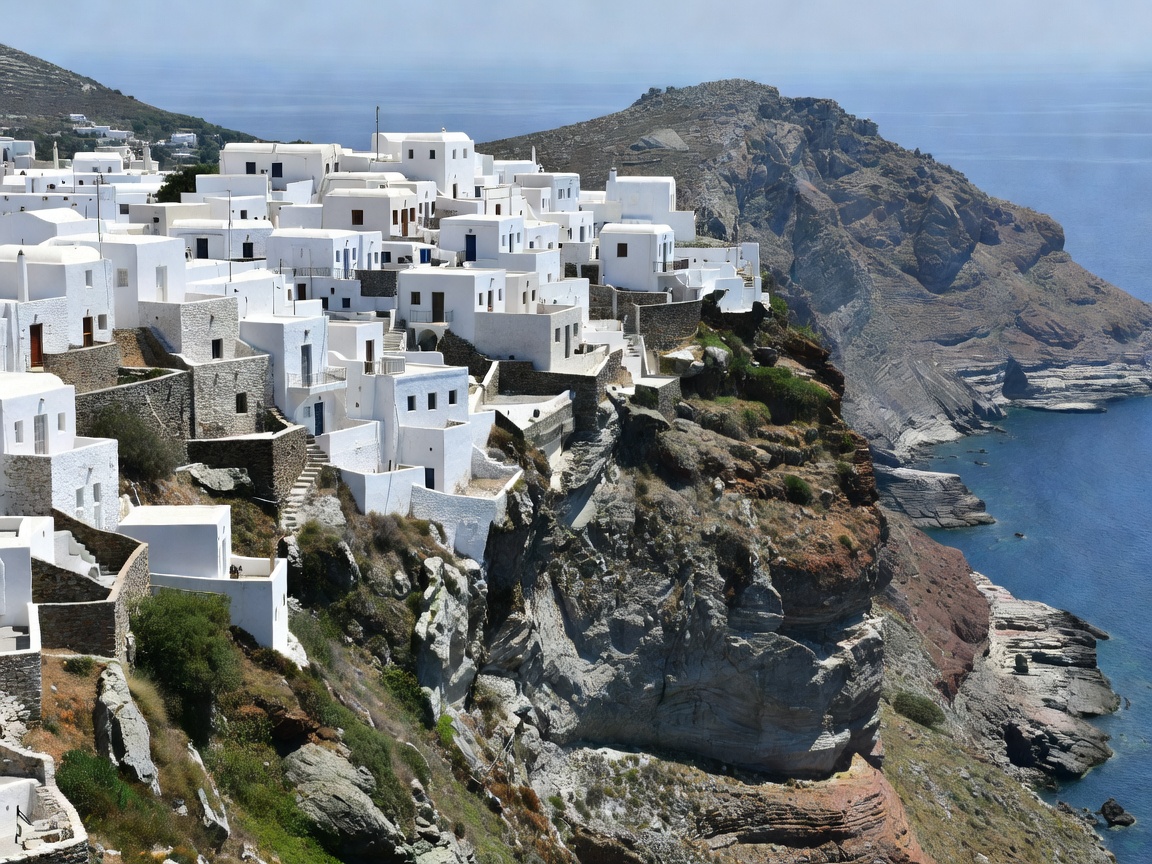
Perched precariously on the edge of a 200-meter sheer limestone cliff dropping vertically into the cobalt Aegean Sea, the Chora of Folegandros is arguably the most visually arresting medieval settlement in the Greek islands. Unlike neighbouring Santorini or Mykonos, Folegandros has strictly resisted mass airport construction and mega-resorts, preserving an atmospheric tranquility that feels centuries removed from the modern world.
The Three Squares and the 13th-Century Kastro
The heart of Folegandros life unfolds across three successive, pedestrianized public squares—Piazza, Kontarini, and Dounavides. Interconnected by narrow stone-paved passages and shaded by ancient plane trees and bougainvillea, these squares serve as communal outdoor living rooms where locals and travelers gather at dusk to share carafes of crisp local wine, sun-cured capers, and handmade matsata pasta with slow-cooked goat.
"To stand at the northern edge of the Castro at sunset is to gaze into the abyss of the ancient Aegean, where the boundary between sky and ocean dissolves in shades of violet and gold."
Directly integrated into the cliffside is the Kastro, a fortified Venetian district built in 1212 by Marco Sanudo. The outer walls of the two-storey whitewashed homes form the defensive rampart of the fortress itself, with miniature wooden balconies and stone arches that remain virtually unchanged since the Middle Ages.
The Serpentine Ascent to Panagia
Ascending from the edge of the town is a striking zigzagging stone pathway leading up to the Church of the Panagia (Virgin Mary). Set against the steep hillside of the ancient acropolis, this whitewashed sanctuary provides panoramic 360-degree vistas across the surrounding Cycladic islands, including Milos, Sifnos, Sikinos, and Ios.
Secluded Coves and Maritime Exploration
The beaches of Folegandros remain largely wild and uncommercialized. Katergo Beach, located on the island's southeastern tip, boasts electric-blue waters framed by dark slate rocks and is reachable either via a 45-minute rugged cliff trail or by regular open-deck kaiki wooden boat from the port of Karavostasis. Other pristine swimming destinations include Agkali, with its small family tavernas serving grilled octopus, and the remote pebble coves of Livadaki and Ambeli.
Practical Traveler Specifications
- Optimal Season: May to June for blooming wild thyme and empty hiking paths; September to mid-October for warm sea temperatures and harvest festivals.
- Transportation: Walking is the primary mode within Chora. Local municipal buses connect Chora, Karavostasis port, and Ano Meria village on regular hourly schedules.
- Culinary Staples: Matsata (fresh ribbon pasta with rooster or beef), Souroto (tangy fresh goat cheese), and Pasteli (honey sesame bars wrapped in lemon leaves).